Young people and students
Absorption center for young adults and students tel 8377481
WWII Veterans
Disabled citizens
Absorption center for young adults and students tel 8377481
WWII Veterans
Disabled citizens
Hole Oleh
Beware!
Beware!
Those who made it to the port of Haifa (Exodus) and
those who could not (Egoz)
those who could not (Egoz)
Haifa is known in Israel as the town where one works.
In Jerusalem people pray, in Tel-Aviv people have fun, in Haifa people work.
But we can say that in Haifa it is possible to pray, to have fun and of course, to work!
In Jerusalem people pray, in Tel-Aviv people have fun, in Haifa people work.
But we can say that in Haifa it is possible to pray, to have fun and of course, to work!
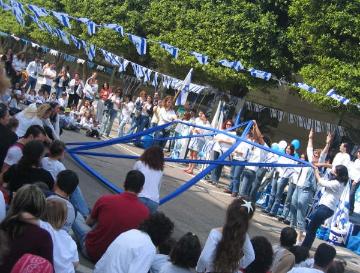
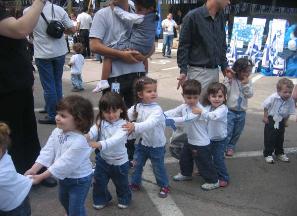

| Haifa, the place for Aliya |
Haifa: Aliyah
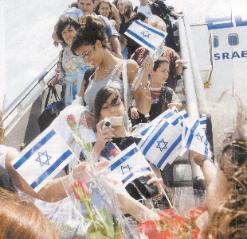


Immigrants at Shaar Ha aliyah



| The State of Israel will be open for Jewish immigration and for the In gathering of the Exiles; it will foster the development of the country for the benefit of all its inhabitants; it will be based on freedom, justice and peace as envisaged by the prophets of Israel; it will ensure complete equality of social and political rights to all its inhabitants irrespective of religion, race or sex; it will guarantee freedom of religion, conscience, language, education and culture; it will safeguard the Holy Places of all religions; and it will be faithful to the principles of the Charter of the United Nations. Proclamation of Independence , 5 Year Pasha's -14/5/1948 |
"Rights of return" , incentives to returning Israelis
Toshav Hozer, site for returning citizens, with lots of informations
for new immigrants
Toshav Hozer, site for returning citizens, with lots of informations
for new immigrants
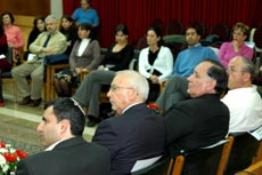
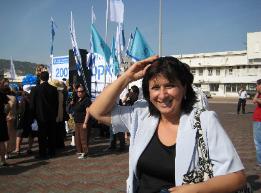








| Haifa is waiting for you A Special absorption project for families and returning residents. 04-9111400 העמותה לקליטת עליה בחיפה The Haifa Association for Immigrant Absorption |
| Haifa's mayor welcomes olim |
Ketty Pardo Roques
| Haifa, a town of integration |
| Practical informations |
| Jewish Agency |
| Formalities |
Haifa municipality: The Association for aliyah in Haifa Shay Fishel
Contact the Project Manager for Olim and Returning Residents from English Speaking
Countries, 972-4-835-6149
for French speaking immigrants, Ketty Pardo Roques
People who can also be helpful:
• Yanina Musnikow, Coordinator AACI, (Association of American and Canadians in
Israel) Northern Region Yanina 03-696-0389 When in Haifa she sits at 131.
HaMeguinim Blvd., Phone: 04-851-0351/2
• Levi Smith Director, Achuza Orthodox Community Center, Haifa – Modern
Orthodox community in Achuza , 04-825-1527
• Rabbi Dubi Hayun Rabbi of Congregation Moria the Masorty/Conservative
Synagogue. 04- Web site http://www.moriahaifa.022.co.il/BRPortal/br/P100.jsp-
• Hadassah president Leah Shavit , l, 04-837-5929 Helen Levy, , 04-825-4057 Lee
Freeman, 04-811-0344 • Or Hadash – Reform Synagogue 55 Hantke St, Tel: 972-4-
8343905/6, E-mail contact
Contact the Project Manager for Olim and Returning Residents from English Speaking
Countries, 972-4-835-6149
for French speaking immigrants, Ketty Pardo Roques
People who can also be helpful:
• Yanina Musnikow, Coordinator AACI, (Association of American and Canadians in
Israel) Northern Region Yanina 03-696-0389 When in Haifa she sits at 131.
HaMeguinim Blvd., Phone: 04-851-0351/2
• Levi Smith Director, Achuza Orthodox Community Center, Haifa – Modern
Orthodox community in Achuza , 04-825-1527
• Rabbi Dubi Hayun Rabbi of Congregation Moria the Masorty/Conservative
Synagogue. 04- Web site http://www.moriahaifa.022.co.il/BRPortal/br/P100.jsp-
• Hadassah president Leah Shavit , l, 04-837-5929 Helen Levy, , 04-825-4057 Lee
Freeman, 04-811-0344 • Or Hadash – Reform Synagogue 55 Hantke St, Tel: 972-4-
8343905/6, E-mail contact
| Help in Haifa |
| Official and voluntary organisations |

Mr Zeev Boim, Minister of Integrations
and Yona Yahav, Mayor of Haifa, meet
new immigrants at Haifa Municipality
and Yona Yahav, Mayor of Haifa, meet
new immigrants at Haifa Municipality

New immigrants who speak English or French receive help at the Information Center of the
Jewish Agency,131, HaMeguinim, Haifa : translation of announcements in newspapers,
contacts, writing of the CV etc..
• Anat Sachartov – Employment Counseling Center (sponsored by Ministry of Absorption).
Helps with CV, Israeli job market, job retraining, etc. 04-872-3802/5, 25 Hamusachim Street,
Lev Hamifratz
• Asya Chairsky - The Jewish Agency Employment Coordinator. Helps with CV, Israeli job
market, job retraining, etc. 04-856-7649, , 131 HaMeguinim Blvd.
• Sasha Weiss, Nefesh B'Nefesh – Employment Coordinator. Helps with CV, Israeli job
market, job retraining, etc
Look at our pages to find links about employment : Employment et Economy , and
employment offers
Jewish Agency,131, HaMeguinim, Haifa : translation of announcements in newspapers,
contacts, writing of the CV etc..
• Anat Sachartov – Employment Counseling Center (sponsored by Ministry of Absorption).
Helps with CV, Israeli job market, job retraining, etc. 04-872-3802/5, 25 Hamusachim Street,
Lev Hamifratz
• Asya Chairsky - The Jewish Agency Employment Coordinator. Helps with CV, Israeli job
market, job retraining, etc. 04-856-7649, , 131 HaMeguinim Blvd.
• Sasha Weiss, Nefesh B'Nefesh – Employment Coordinator. Helps with CV, Israeli job
market, job retraining, etc
Look at our pages to find links about employment : Employment et Economy , and
employment offers
| Employment |
| It is not always easy |
| History |
Ministry of Integration 24/24 apart from shabbat and holidays 03-9733333 then 6
Ministry of absorption in Haifa
Pal Yam 15, tel:8632323 fax 8632336
Ministry of absorption in Kyriat Bialik,
Hameyasdim 7 tel 8807400 fax 8742957
First steps
Integration basket
Calendar of formalities addresses in Haifa, office opening hours
Ministry of absorption in Haifa
Pal Yam 15, tel:8632323 fax 8632336
Ministry of absorption in Kyriat Bialik,
Hameyasdim 7 tel 8807400 fax 8742957
First steps
Integration basket
Calendar of formalities addresses in Haifa, office opening hours
| Ministry of Integration |
Association of Americans and Canadians in Israel
South African Zionist Federation (Israel) Telfed
WZO
Hagshama
Masa Israel
Keren Hayesod
Archives
Nefeshb'nefesh
Taglit
ESRA
South African Zionist Federation (Israel) Telfed
WZO
Hagshama
Masa Israel
Keren Hayesod
Archives
Nefeshb'nefesh
Taglit
ESRA
According to the needs of the work market, retraining courses take place. Retraining course for
academics:nursing
We keep you aware of these courses. See our page Employment for updated events
academics:nursing
We keep you aware of these courses. See our page Employment for updated events
| Some articles from the Jerusalem Post and from Haaretz |
From Haaretz, April 28 2009
Today I feel that I belong By Yevgenia Dodina
I, Yevgenia Dodina, born in Belorussia, daughter of Boris and Sarah and mother of Anna, a graduate of the Royal Drama
Academy of Moscow, immigrated to Israel with a group of actors thanks to our teacher, director Yevgeny Arye. Together we
established the Gesher Theater of Jaffa. I now perform with the Habima national theater.
This is the script I have been studying for several weeks. It moves me more than any monologue I have ever performed. It is the
script reflecting the most important decision I have ever made.
My first performance in Israel was silent. Then for months I acted in Hebrew without understanding a word. I did my Hebrew
apprenticeship with Tel Aviv cab drivers. They were my Israeli ears for whole monologues from plays I was trying to memorize.
They listened in silence, not understanding a word of the concoction of sounds I tried to transform into Hebrew sentences.
"I beg you. Face your fate. Stand before the most horrible trials that still await you." This was the first sentence that prompted a
reaction. The startled driver stopped his cab, brakes squealing, and asked in amazement, "But why, honey?" At that moment, I
knew I would manage.
Even today, in press interviews, I always get the question: "Do you feel Israeli?" Eighteen years of living in Tel Aviv don't seem
to entitle you automatically to an Israeli identity. I always ask in response: "What does it mean to feel Israeli?" I have never
received an answer.
I am lighting a flame in honor of theater and in honor of aliyah. These are two things of which I am a part, and they are
inseparable parts of Israel, of the same mosaic of cultures that makes this country what it is. Last week I appeared at the central
Holocaust Day ceremony at Yad Vashem. Today, on the eve of Independence Day, I am lighting a flame for the State of Israel. I
have still not gotten an answer as to what it means to be Israeli. But I certainly already feel that I belong.
From the Jerusalem Post
Out There: Singing Israel's praises abroad
May. 2, 2009
Herb Keinon , THE JERUSALEM POST
How to sing Israel's praises in a strange land, to paraphrase the well known psalm, came to mind while marking Holocaust
Remembrance Day, Yom Hazikaron and Yom Ha'atzmaut this year not in Israel, the natural place for their commemoration, but
rather in the US.
"You are not going to be here for Yom Hashoah," my youngest son asked a few weeks ago when he learned I was going abroad
for a couple weeks. "What are you going to do about the siren? Do they sound the siren in the States?"
"No," I replied. "They don't sound the sirens in the States."
Which got me thinking abut how my kids have grown up so different than I, and how they grew up believing the natural order of
things was for a siren to sound across the country to memorialize 6 million Jews, or commemorate the sacrifice of some 22,000
IDF soldiers. That, actually, was one of my goals when I moved here 27 years ago - to raise kids for whom the "Jewish stuff"
was actually the natural order of the universe.
In that, at least, we succeeded.
Some 12 summers ago, when my oldest son was only eight, we spent a couple of weeks in Denver. One stormy Friday night a
siren sounded there, and my son - as he was taught in school - got up from the table and stood at rapt attention, not realizing this
siren had nothing to do with the Holocaust or Israel's wars, but was rather just a tornado warning. While everyone else was
scampering for the basement, he stood with his head slightly bowed, arms at his side. It's all about what you're used to.
TWENTY-SEVEN YEARS is not an insubstantial period of time in my life, nor in the life of this country, and it is how long I've
been here - first as tourist/university student, then as yeshiva bocher, employee, husband, father, homeowner, soldier, father of
soldier. Yet I often still feel like an outsider, but that is more a fault of my own than one I can place at the country's doorstep.
Indeed, in these days of retrospectives written about Israel, much of the faults we toss on to the state are really just our own
imperfections. The state is a mirror of those who make it up: If the state is shallow, adrift, cynical, it is a reflection of us. If the
country is strong, resilient, alive, that, too, is a reflection of us.
My roles have changed during my years here, as has my vision of my adopted land. Indeed, my vision of the country has changed
as my roles have changed.
I've gone from starry-eyed tourist soaking up every hike, to weary traveler begrudgingly schlepping the kids on treks because I
deem it the Israeli-fatherly thing to do.
I've gone from a spiritually thirsty yeshiva student who loved to roam the alleys of Mea She'arim, to an impatient consumer who
goes to the crowded streets of that haredi neighborhood very reluctantly and then only to buy certain items on the cheap, the place
no longer having any pull for me.
I've gone from overly romantic idealist seeing pioneer values realized in claiming empty hills in Judea and believing there really
could be a way to work things out there with the Palestinians, to tempered pragmatist who sees no way to benignly hold on to
those hills, yet realistic enough to understand that giving them up will create as many problems as staying there.
THE DIFFERENT ways I have seen the country, the different ways it has appeared to me, are as much a result of changes I have
undergone as the result of changes that have taken place within the country itself. I have grown older, gained some experience,
lost some exuberance, become much more cynical and, as a result, have looked at the country differently.
But certain things have remained constant. I'm still moved by watching soldiers being sworn in at the Western Wall, am filled
with pride by acts of Israeli valor - be they military heroics, athletic achievements or even a mundane news report of young
technological whiz kids cracking terrorist cells on the Internet.
Sure, the country we live in now is not the same one I came to more than a quarter century ago - it is less idealistic, less of a
collective, more materialistic. But so am I.
It is also more efficient, smoother around the edges, not as rude or as brazen. As I am as well.
We've changed, both the country and myself. Not necessarily for better, or for worse, just changed: gotten older, learned, faced
more challenges, had to make decisions, made some right choices and some wrong ones.
Much has been written over the last few weeks about a country adrift, one that did not live up to its initial promise. Please. The
initial promise was unrealistic, overly idealized.
We face a bitter and often cruel reality here - a reality that forces us at times to compromise some of our values. We are not the
pristine vision that was dreamed of 60 years ago - but that vision was just that: a vision. Real life, the day to day, is much more
complex, messier, more complicated.
For hundreds of years Jews could only dream of a state, and their dreams were often over-idealized. It is easy to love something
that exits only in the mind, it is then possible to idealize it, place it on a pedestal. But when you come face to face with it, the
reality often clashes with the vision.
To paraphrase Dostoevsky, it is easy to love humanity, it is the person coughing next to you on the bus whom it is difficult to like.
And in Israel, there are a lot of folks coughing on the buses.
Yet it is within the confines of a very difficult reality, a bitter and cruel reality, that this country has still managed to thrive. This is
a country that is vibrant, a country that pulsates with energy, that is alive, very much alive.
It is also a country in which kids think marking Holocaust Remembrance Day, Yom Hazikaron and Yom Ha'atzmaut is the
normal thing to do, not the aberration.
And that small thing - amid everything else - is both telling and something not to be taken for granted.
This article can also be read at http://www.jpost.com /servlet/Satellite?cid=1239710841083&pagename=JPArticle%2FShowFull
From Haaretz 20/09/2005
Survival guide - your tips on expecting the unexpected in Israel
Spread the wisdom of your experience with other hapless souls - e-mail us your solutions to Israeli life's little crises.
How to survive being a kibbutz volunteer
Whatever overly-romantic Zionist illusions of communal brotherhood you may have had upon arrival at Ben-Gurion; realize that
when you arrive at your kibbutz, at least at first, the kibbutzniks are going to act as if you have cholera.
You must earn your place among them just as they
have had to do with each other. All the rosy colored pictures from the sixties of flowered haired girls and guitars around the fire
are most of the time a thing of the past.
But, if you work hard and keep an open, friendly
attitude, your indentured servitude just might turn into that elusive sense of community that you came for in the first place. I
wouldn't trade it for anything in the world.
Sean Eatherton (ex-volunteer Kibbutz Ketura)
How to Survive Being a Kibbutz Volunteer Part 2
So you've arrived at the kibbutz. A little apprehensive and a lot jet lagged..
1. Accommodations: If you're lucky the inhabitants before you were a couple steps up from cave men and left your new bayit
(house) in some what livable conditions. If you're not, it's best to probably shack up with those Bedouin you passed on the way
and commute to the kibbutz. Which, ironically, many people DO commute to kibbutz. Add to this that you're crammed three to a
bedroom and I'm sure you can do the math.
2.Roommates: These can be a blessing or a curse depending on YOU. If you came to kibbutz to get a tan, drink some beer, smoke
some nargila and get warm and fuzzy with a fellow volunteer and not much else, than you've come to the right place. If you came
for some crazy Socialist labor fest where you commune with your fellow volunteers and stay up all night discussing your
contribution to Israeli society than I'd have to say there's probably an organic farm in Denmark with your name on it. Another
lovely side effect of your house companions is emotional conflict. Please refer to references about alcohol and sleeping
arrangements above to appreciate the full nature of how this makes your stay oh so much fun.
3. Work: Ah yes... The reason why the kibbutzniks are begrudgingly letting you stay on their farm to begin with.....you're basically
working for them for free. Now of course your are being fed and given board, but this is up for interpretation. Depending on how
long you're there( which averages from two to six months)this will determine the work you do. Longer stays usually qualify you
for the dairy farm or "refet" because this takes a little more training than the dining hall. A note on the Dining Hall ( or as I like
to call it "The place where volunteers go to die") Almost everyone including the kibbutzniks themselves work in the Dining Hall.
If you can, try as soon as possible to get assigned to other work.....you may think that the fancy dish washing machine and air
conditioning are worth the bargain, but trust me....get other work. If anything, get out of the Dining Hall so you can work and get
to meet with that most elusive of species for the volunteer...the kibbutznik.
4. The Kibbutzniks: If you're like me you came to a kibbutz to do one thing over all others;to make a connection with the country
and even more, the people. So upon arrival at kibbutz and in your first couple of weeks you might be quite shocked and dismayed
by the way the kibbutzniks treat you and think of you. This attitude can range from aloof to surely to down right belligerent. But
don't get discouraged. You will soon discover that this is how most Israelis treat each other anyway and to not take it personally.
Also this is just the preliminary period for the kibbutzniks to figure out if you are volunteer type # 1 or type # 2 that I referred to at
the beginning. For kibbutzniks, volunteer #1 is just eating their food, drinking their water and being a regular pain in the teaches
by consistently not showing up to work on time. But if you show proof that you are the starry eyed idealist whose showing up a
half hour early just to "help out" you just might, if you're not careful, be asked to stay on full time.
Do not be put off by these musings about the ups and downs of kibbutz volunteering. Any grief experienced is still in my opinion
worth it. As long as you know what you're getting into you'll do great. These may or may not be words of wisdom, but they are
the truth.
Sean Eatherton (ex-volunteer Kibbutz Ketura)
How to Survive Israeli Drivers
Take the train.
It runs contrary to all Israeli expectations:
It arrives on time. It's quiet. It's safe. It's clean. It's comfortable. It tells you it's going to do something, and it does it.
Samuel Kalman, Nataf
How to Survive Israeli Drivers II
Have you ever pulled up to a red light in Israel only to notice that the driver of the car next to you is staring at you? No, he is not
a carjacker. Nor does he consider you to be particularly attractive or ugly.
This is merely Israeli-style etiquette. The proper response is to stare back and hold his gaze for at least 30 seconds, or until the
driver behind you indicates by honking his horn that the light is about to turn green. (Beware: This is habit-forming. You may
want to practice not staring before taking a trip abroad.)
Should the driver in the next car yell, "At/a mocher/et? [Are you selling?]," he or she means your car - not your body.
Pnina Beili, Har Adar
One Way Streets - No Way
You're going on a road trip and you've checked out the map to make sure you are aware of all the one way streets. You assume
everyone does the same, right? Wrong! Don't be surprised to see 1) another car coming straight at you 2) someone backing up the
street towards you 3) someone turning out of a laneway coming straight towards you. Also note that anyone of these vehicles may
be a moving van, local garbage truck, speeding Mazda or, the worst and most dangerous, any one of the aforementioned on their
cellphone. Survival tip: be like Linda Blair in the Exorcist - Merle Shewchuk, Herzliya
How to Survive the Interior Ministry
Play dumb - nothing irritates them more than a know-it-all and nothing inspires sympathy more than a helpless immigrant.
Take a deck of cards for those long queues - everyone is waiting and no one else is prepared. You might even make a friend or
two.
Don't get there too early. The opening rush will have dispersed by about 10A.M. - under no circumstances be there at 7.
Lucy Roth, Jerusalem
How to Survive the Interior Ministry II
First take a number. As soon as you get in the door. (Numbers come out of a machine familiar to those of you abroad who
frequent very crowded delis.)
Then do the math: Multiply the difference between your number and the number that is being served by two. Divide that number
by the number of disgruntled clerks "serving" the public. This gives you a conservative estimate of the amount of time that you
have to run to the nearest coffee bar for a latte and croissant.
Thrill seekers may multiply the first number by three. But beware: If you miss your place in line, you may be asked to take a new
number and go back to the beginning, Parcheesi style, or do battle with chair-throwing Jews from all four corners of the globe to
protect your former position in line.
Second: Take pens. They come in very handy for filling out those nasty forms, and can be traded for favors. Example: There are
some who collect number slips, just in case, and will trade you a number better than the one you have for the use of a pen. (You
may also meet someone. That's why you came here, isn't it?)
The advice above works in all bureaucratic settings in Israel, including health clinics, but I wouldn't go looking in the latter
setting for a date.
Rosie, Jerusalem
Survive the Interior Ministry - The Real Way
The REAL way to survive the Interior Ministry, especially if you are not a citizen yet and need to go to the visa section, is to get
the security guard to put your name on the list the day before at the visa section at the Misrad HaP'nim in Tel Aviv, there is - or
was - a list that you had to sign up on starting from about 6 A.M. which was taped to the wall next to the front door.
I reasoned that they can't just have it there and someone must be there to make sure the list doesn't get torn down. I asked the
security guard at the building about this, and he magically produced the list which I signed right there - making me first on the
list. Then you just have to show up maybe half-an-hour before so that when they open the doors its as fresh as a daisy instead of
getting up in the middle of the night to go and wait in line outside the Shalom Tower at 6 A.M.
Malaika Martin, NYC, formerly of Tel Aviv
How to Survive Lines in Israel
You will at some point find yourself on a long line somewhere (in the post-office, the showers at the neighborhood pool, the bank)
when someone will approach you from behind, ascertain whether you are the last one, announce, "I'm after you." and vanish.
Now, if you remain silent, he will consider you official keeper- of- his- spot- on-line." Consequently, when he returns and jumps
ahead of everyone who arrived while he was out doing other errands, he will call upon you to defend his position.
On other occasions, when you are finally about to be served, after a half-hour or more wait, someone will appear out of nowhere,
plonk himself in front of you, and announce, "I was here." If you challenge him, he will, in his defense, tap the person ahead of
you and remind him, "Wasn't I after you?" and elicit the reinforcing "Yes, of course, you were."
"You can either act Israeli and oblige these line-crashers or you can - as I always do - attempt to educate them as to
internationally accepted line-waiting ethics. Expect the old "But this is the way it's done here" along with a tirade of expletives,
but at least you'll get the satisfaction of having contributed to the eventual improvement of quality of life in this country.
Frimet Roth
Wear your New Immigrant-ness openly
As a recent Olah Chadasha [new immigrant] (Jan 2005) I have found 2 great survival techniques. The first is to introduce
yourself as an Olah Hadasha/ Oleh Hadash. This conversation entry point gives me an edge during any interaction be it on the
street, in Ministries (as noted in the article) in restaurants and stores.
Israelis seem to be so shocked that anyone would leave the comforts of North America (in my case Canada) to a new life in Israel,
that they will do anything to prove to you that everything you've heard (or read) about them is untrue. I'm not sure what the
acceptable duration is for this tip (ie: 6 months, 1 year, 5 years) but, hey, who would ever know the difference?
The second tip, speak English. Israelis are desperate to improve their English and, as such, I've even had apologies given to me in
Tel Aviv when a spot was not available in a parking lot! Imagine that!
Merle Shewchuk, Herzliya
How to survive Israeli men
Cute, but dangerous - be prepared for the fact that Israeli men will say, do and try absolutely anything to get what they want. This
includes flattery beyond anything ever heard before, wining and dining, and - depending on their area of employment - free
services e.g. haircuts, taxi rides, bus rides, donkey rides, photographs (of you), clothes, massages and a weekend in Eilat or, if
you're unlucky, Ashdod.
But be warned - if they do get what they want they will either a) suddenly disappear never to be seen or heard of again, or b) hook
up with someone else (even whilst you are out with them), and dump you unceremoniously (even if you are in Eilat).
Alternatively, if they don't get what they want, they will a) suddenly disappear never to be seen or heard of again, or b) hook up
with someone else...
You have been warned!
Ilana Berkowitz
Regarding Israel men: I believe that in every part of the world you will find the positives and the negatives of life. You are saying
that Israeli men are aggressive and forward. What about the French and the Italian men?
If you treat people with respect, you will be treated with respect, also.
Any lady, young or older must protect herself no matter what.
Ida
How to survive Israeli women
The Israeli female species is one of the world's toughest codes to crack. The criminal underworld have succeeded in deciphering
some of the most difficult codes in the world but find themselves completely stumped with the Israeli woman.
Going out to a bar or pub in Israel with the intention of finding yourself a female to snuggle next to, may take time to perfect. The
Israeli woman is used to getting her way and being gawked at by every male on the premises. There are two ways to approach this
situation.
If you are short on money and a female asks you to buy a drink for them (this usually occurs before the formal introduction
stage), then ignore them, act disinterested but every now and then look in their direction. If you find her looking at you more than
twice then you're in. If it's less, you may have to look elsewhere. The initial disinterest is sure to frustrate the Israeli female, who
is used to getting what she wants, making you more of a challenge then the average sleazy Israeli male. The rule of two glances is
commonly known to Israelis in general, so by looking at her from a distance she is going to be confused, frustrated and curious
all at once. A task that is particularly easy to do.
If she strikes up a conversation then be sure to keep it simple. The average Israeli woman is very rarely interested in any topic
over two syllables. Topics such as shopping, cars, clothes and beaches are all safe topics of conversation. Topics like education,
politics, human rights and animal liberation are absolute no-no's. Chances are if you attempt the latter you will be met with a
blank look, a smile and a childish ditsy giggle.
The other situation you may find yourself in, is that you have money. Rest assured that if they sense this, your wallet will soon be
as dry as The Great Sandy Desert. If you buy them a drink you will find them talking to you and acting disinterested, all at the
same time. Don't be alarmed; it is their way of leading you on. All you have to do is walk five meters and dance next to another
member of the species without losing sight of the first Israeli female. Give her one minute of looking at you then walk over, grab
her hand, hold her close and there's a good chance she'll be yours.
If all else fails call their game. Israeli women are like an out-of-date krembo. Tough to crack through the outside layer, but once
you're through, they are a bunch of softies. Ask them bluntly why they pretend to be tough and play so hard to get when it is
merely a front for their own insecurities? This can only be used in extreme circumstances and is not the initiating question.
Remember just like the topics of conversation they are not used to confrontation.
Good luck guys and girls, we hope you can succeed where many a foreigner has failed!
Simon Trainor.
How to survive Israeli university
The Israeli university experience: Bureaucracy, bafflement, and beyond.
I spent half of high school dreaming about being a university student. I could see myself demurely sipping espresso on the verdant
campus grounds while discussing the latest trends in politics with my fellow students in chic sweater vests and ripped jeans.
When I left America at the tender age of eighteen to continue my education at an university in Israel, I was excited and optimistic
about my future. University was supposed to be the place where all my dreams would come true. But from the moment I stepped
onto the campus, all my meticulously-crafted plans seemed to fall to pieces. In the end, Israeli university is where all my worst
nightmares came true.
I quickly learned to lower my expectations in my charming new setting. After a few weeks of being mistreated in the
administrative offices, being shoved out of lines in the cafeteria by my dear, fellow students, and registering for my classes three
times in a row (my records were continuously misplaced), I accepted the fact that Dorothy was not in Kansas anymore.
And, now, as a more seasoned Israeli student, I will give you the Dos and Don'ts of Israeli university:
* If the secretary is ignoring you, DO stand in front of her desk, peel your eyelids up to your brows, and stare until she has no
choice but to get creeped out and attend to your needs.
* If someone shoves you out of line at the cafeteria, DO shove back.
* If that someone is your professor, DON'T shove back.
* If youre refused your records at the archive, DO steal them when the administrator isnt looking.
* DON'T feed the cats -- They will follow you to class.
* If youre not getting your way in one of the offices, DO scream and wave your hands around.
* However, DON'T break any chairs -- The secretary will call security.
Yes, its over dramatic, pathetic, and humiliating. But it works! Just remember to breathe and enjoy the ride.
from Haaretz 04/07/2007
Dual loyalty, baseball, and the Israeli psyche
By Bradley Burston
For the immigrant, the majority culture is inevitably despotic. This is not to say that it will in all cases dismiss, ridicule, exploit
and discriminate against the newcomers in its midst. On the contrary, the dominant culture may well be seductive, exhilarating,
even, in rare cases, authentically welcoming. The message, however, stays the same: You're ours, now. Even if we'll never treat
you as one of us, you'd better act as if you were.
This may explain a recent opinion piece in the Jerusalem Post, timed to coincide with the opening game of Israel's first
professional baseball league, entitled "Baseball is too American for us Israelis."
"I did not make Aliya to promote American culture in Israel or to live in an American ghetto, but to become part of the Israeli
landscape," writes Brian Freeman, who moved to the Jewish state from the baseball-besotted heartland American city of
Cincinnati, Ohio 18 years ago.
The cultural baggage which Freeman left in Ben-Gurion airport's Arrivals area included more than his childhood love of the
arcane sport, which could be said to be the common religion of North American Jewry.
He also stopped observing such holidays as Thanksgiving, "or any of the other customs left behind. Frankly, I don't understand
those US immigrants who do it, as if our Israeli/Jewish culture is lacking somehow."
One way to deal with this is to give up and give in. Brian Freeman has solved his problem by sparing his children the culture of
his birth. "Why should I create a dual identity for them? The idea of moving here was to have an Israeli identity and not continue
as if I was still living in the Old Country."
Well and good. Except that this country, this culture, this very Israeliness was built of, and immensely enriched by, the cultures of
the people who left distant homes to come here. And for all that Israelis and, for that matter, North Americans, may look down
on North American culture, there may well be something in it for Israelis.
Or take as an example a game for which Israelis have no patience. What on earth could baseball have to teach them? Herewith,
some possibilities:
You think you know your opponent. Think again.
You think you know yourself. Think again.
Respect patience.
Respect practice.
Acknowledge error.
Respect opponents.
Respect rules.
Respect teammates.
Respect activities foreign to your experience.
Learn to use your hands, not just your feet.
Learn to take advice.
Learn to evaluate and internalize criticism.
Respect self-discipline.
That is, appreciate and adopt the ability to temper personal ambition for the good of the collective. This is similar to
Sacrifice for the common good is not always the act of a sucker.
In the end, trying to spare your kids a dual identity may not be the wisest choice. There may be a type of cultural dual loyalty
which we possess whether we like it or not. There's something to be said for embracing it.
Even that November Maimouna of ours called Thanksgiving. Even the hated strain of Americanism can have its moments,
among them, this commemoration of disparate people helping each other through hard times, people of different backgrounds,
outlooks, customs - people who could be enemies - celebrating the fact of being alive, and together.
There's worse things than dual loyalty to so-existing cultures. One of them is denial. Try what you like, you can take the oleh out
of America, but you can't take America out of the oleh.
Former Israeli Ambassador to the United States, Daniel Ayalon, has been appointed co-chair of Nefesh B'Nefesh, the
Jerusalem-based Aliya organization announced yesterday.
In an interview with Haaretz following the appointment, Ayalon said, "It is not unrealistic to think of a million Jews"
immigrating to Israel by 2020 - a goal he calls "important politically and strategically."
"Look at Europe and there are many uncertainties there," he said. "It is a great reservoir (for aliyah)."
NBN is now active in North America and the UK, but Ayalon believes that the possibility of expanding the organization "should
be discussed and analyzed." "Every country and every [Jewish] community around the globe could benefit" from the
organization, he said. He would not specify a country, however.
Though the position is unpaid, Ayalon insisted that he would have an active "full time" job in which he would be far more that
just a figurehead.
"I have been asked to advise and consult for business, but my main focus is on Nefesh," he said. "Part of the way I saw myself in
Washington was not staying in the bubble in Washington, but rather reaching out and visiting communities. I intend to do that
now."
Ayalon said that a key focus would be "raising awareness" among the Israeli public to "open up their hearts and minds to olim
[immigrants]" so that the new arrivals feel welcome here. Ayalon, whose U.S. posting came to an end in November, has been
succeeded in Washington by Ambassador Sallai Meridor, who is former chair of the Jewish Agency.
He will be honored Sunday at a celebration in Washington, where President George W. Bush is set to be keynote speaker.
Though overall immigration rates for 2006 constituted an 18-year low, numbers from North America and the UK were the
highest in more than two decades, with 3,200 and 720 arrivals respectively. Last month, the organization also celebrated the
processing of its 10,000th immigrant.
Today I feel that I belong By Yevgenia Dodina
I, Yevgenia Dodina, born in Belorussia, daughter of Boris and Sarah and mother of Anna, a graduate of the Royal Drama
Academy of Moscow, immigrated to Israel with a group of actors thanks to our teacher, director Yevgeny Arye. Together we
established the Gesher Theater of Jaffa. I now perform with the Habima national theater.
This is the script I have been studying for several weeks. It moves me more than any monologue I have ever performed. It is the
script reflecting the most important decision I have ever made.
My first performance in Israel was silent. Then for months I acted in Hebrew without understanding a word. I did my Hebrew
apprenticeship with Tel Aviv cab drivers. They were my Israeli ears for whole monologues from plays I was trying to memorize.
They listened in silence, not understanding a word of the concoction of sounds I tried to transform into Hebrew sentences.
"I beg you. Face your fate. Stand before the most horrible trials that still await you." This was the first sentence that prompted a
reaction. The startled driver stopped his cab, brakes squealing, and asked in amazement, "But why, honey?" At that moment, I
knew I would manage.
Even today, in press interviews, I always get the question: "Do you feel Israeli?" Eighteen years of living in Tel Aviv don't seem
to entitle you automatically to an Israeli identity. I always ask in response: "What does it mean to feel Israeli?" I have never
received an answer.
I am lighting a flame in honor of theater and in honor of aliyah. These are two things of which I am a part, and they are
inseparable parts of Israel, of the same mosaic of cultures that makes this country what it is. Last week I appeared at the central
Holocaust Day ceremony at Yad Vashem. Today, on the eve of Independence Day, I am lighting a flame for the State of Israel. I
have still not gotten an answer as to what it means to be Israeli. But I certainly already feel that I belong.
From the Jerusalem Post
Out There: Singing Israel's praises abroad
May. 2, 2009
Herb Keinon , THE JERUSALEM POST
How to sing Israel's praises in a strange land, to paraphrase the well known psalm, came to mind while marking Holocaust
Remembrance Day, Yom Hazikaron and Yom Ha'atzmaut this year not in Israel, the natural place for their commemoration, but
rather in the US.
"You are not going to be here for Yom Hashoah," my youngest son asked a few weeks ago when he learned I was going abroad
for a couple weeks. "What are you going to do about the siren? Do they sound the siren in the States?"
"No," I replied. "They don't sound the sirens in the States."
Which got me thinking abut how my kids have grown up so different than I, and how they grew up believing the natural order of
things was for a siren to sound across the country to memorialize 6 million Jews, or commemorate the sacrifice of some 22,000
IDF soldiers. That, actually, was one of my goals when I moved here 27 years ago - to raise kids for whom the "Jewish stuff"
was actually the natural order of the universe.
In that, at least, we succeeded.
Some 12 summers ago, when my oldest son was only eight, we spent a couple of weeks in Denver. One stormy Friday night a
siren sounded there, and my son - as he was taught in school - got up from the table and stood at rapt attention, not realizing this
siren had nothing to do with the Holocaust or Israel's wars, but was rather just a tornado warning. While everyone else was
scampering for the basement, he stood with his head slightly bowed, arms at his side. It's all about what you're used to.
TWENTY-SEVEN YEARS is not an insubstantial period of time in my life, nor in the life of this country, and it is how long I've
been here - first as tourist/university student, then as yeshiva bocher, employee, husband, father, homeowner, soldier, father of
soldier. Yet I often still feel like an outsider, but that is more a fault of my own than one I can place at the country's doorstep.
Indeed, in these days of retrospectives written about Israel, much of the faults we toss on to the state are really just our own
imperfections. The state is a mirror of those who make it up: If the state is shallow, adrift, cynical, it is a reflection of us. If the
country is strong, resilient, alive, that, too, is a reflection of us.
My roles have changed during my years here, as has my vision of my adopted land. Indeed, my vision of the country has changed
as my roles have changed.
I've gone from starry-eyed tourist soaking up every hike, to weary traveler begrudgingly schlepping the kids on treks because I
deem it the Israeli-fatherly thing to do.
I've gone from a spiritually thirsty yeshiva student who loved to roam the alleys of Mea She'arim, to an impatient consumer who
goes to the crowded streets of that haredi neighborhood very reluctantly and then only to buy certain items on the cheap, the place
no longer having any pull for me.
I've gone from overly romantic idealist seeing pioneer values realized in claiming empty hills in Judea and believing there really
could be a way to work things out there with the Palestinians, to tempered pragmatist who sees no way to benignly hold on to
those hills, yet realistic enough to understand that giving them up will create as many problems as staying there.
THE DIFFERENT ways I have seen the country, the different ways it has appeared to me, are as much a result of changes I have
undergone as the result of changes that have taken place within the country itself. I have grown older, gained some experience,
lost some exuberance, become much more cynical and, as a result, have looked at the country differently.
But certain things have remained constant. I'm still moved by watching soldiers being sworn in at the Western Wall, am filled
with pride by acts of Israeli valor - be they military heroics, athletic achievements or even a mundane news report of young
technological whiz kids cracking terrorist cells on the Internet.
Sure, the country we live in now is not the same one I came to more than a quarter century ago - it is less idealistic, less of a
collective, more materialistic. But so am I.
It is also more efficient, smoother around the edges, not as rude or as brazen. As I am as well.
We've changed, both the country and myself. Not necessarily for better, or for worse, just changed: gotten older, learned, faced
more challenges, had to make decisions, made some right choices and some wrong ones.
Much has been written over the last few weeks about a country adrift, one that did not live up to its initial promise. Please. The
initial promise was unrealistic, overly idealized.
We face a bitter and often cruel reality here - a reality that forces us at times to compromise some of our values. We are not the
pristine vision that was dreamed of 60 years ago - but that vision was just that: a vision. Real life, the day to day, is much more
complex, messier, more complicated.
For hundreds of years Jews could only dream of a state, and their dreams were often over-idealized. It is easy to love something
that exits only in the mind, it is then possible to idealize it, place it on a pedestal. But when you come face to face with it, the
reality often clashes with the vision.
To paraphrase Dostoevsky, it is easy to love humanity, it is the person coughing next to you on the bus whom it is difficult to like.
And in Israel, there are a lot of folks coughing on the buses.
Yet it is within the confines of a very difficult reality, a bitter and cruel reality, that this country has still managed to thrive. This is
a country that is vibrant, a country that pulsates with energy, that is alive, very much alive.
It is also a country in which kids think marking Holocaust Remembrance Day, Yom Hazikaron and Yom Ha'atzmaut is the
normal thing to do, not the aberration.
And that small thing - amid everything else - is both telling and something not to be taken for granted.
This article can also be read at http://www.jpost.com /servlet/Satellite?cid=1239710841083&pagename=JPArticle%2FShowFull
From Haaretz 20/09/2005
Survival guide - your tips on expecting the unexpected in Israel
Spread the wisdom of your experience with other hapless souls - e-mail us your solutions to Israeli life's little crises.
How to survive being a kibbutz volunteer
Whatever overly-romantic Zionist illusions of communal brotherhood you may have had upon arrival at Ben-Gurion; realize that
when you arrive at your kibbutz, at least at first, the kibbutzniks are going to act as if you have cholera.
You must earn your place among them just as they
have had to do with each other. All the rosy colored pictures from the sixties of flowered haired girls and guitars around the fire
are most of the time a thing of the past.
But, if you work hard and keep an open, friendly
attitude, your indentured servitude just might turn into that elusive sense of community that you came for in the first place. I
wouldn't trade it for anything in the world.
Sean Eatherton (ex-volunteer Kibbutz Ketura)
How to Survive Being a Kibbutz Volunteer Part 2
So you've arrived at the kibbutz. A little apprehensive and a lot jet lagged..
1. Accommodations: If you're lucky the inhabitants before you were a couple steps up from cave men and left your new bayit
(house) in some what livable conditions. If you're not, it's best to probably shack up with those Bedouin you passed on the way
and commute to the kibbutz. Which, ironically, many people DO commute to kibbutz. Add to this that you're crammed three to a
bedroom and I'm sure you can do the math.
2.Roommates: These can be a blessing or a curse depending on YOU. If you came to kibbutz to get a tan, drink some beer, smoke
some nargila and get warm and fuzzy with a fellow volunteer and not much else, than you've come to the right place. If you came
for some crazy Socialist labor fest where you commune with your fellow volunteers and stay up all night discussing your
contribution to Israeli society than I'd have to say there's probably an organic farm in Denmark with your name on it. Another
lovely side effect of your house companions is emotional conflict. Please refer to references about alcohol and sleeping
arrangements above to appreciate the full nature of how this makes your stay oh so much fun.
3. Work: Ah yes... The reason why the kibbutzniks are begrudgingly letting you stay on their farm to begin with.....you're basically
working for them for free. Now of course your are being fed and given board, but this is up for interpretation. Depending on how
long you're there( which averages from two to six months)this will determine the work you do. Longer stays usually qualify you
for the dairy farm or "refet" because this takes a little more training than the dining hall. A note on the Dining Hall ( or as I like
to call it "The place where volunteers go to die") Almost everyone including the kibbutzniks themselves work in the Dining Hall.
If you can, try as soon as possible to get assigned to other work.....you may think that the fancy dish washing machine and air
conditioning are worth the bargain, but trust me....get other work. If anything, get out of the Dining Hall so you can work and get
to meet with that most elusive of species for the volunteer...the kibbutznik.
4. The Kibbutzniks: If you're like me you came to a kibbutz to do one thing over all others;to make a connection with the country
and even more, the people. So upon arrival at kibbutz and in your first couple of weeks you might be quite shocked and dismayed
by the way the kibbutzniks treat you and think of you. This attitude can range from aloof to surely to down right belligerent. But
don't get discouraged. You will soon discover that this is how most Israelis treat each other anyway and to not take it personally.
Also this is just the preliminary period for the kibbutzniks to figure out if you are volunteer type # 1 or type # 2 that I referred to at
the beginning. For kibbutzniks, volunteer #1 is just eating their food, drinking their water and being a regular pain in the teaches
by consistently not showing up to work on time. But if you show proof that you are the starry eyed idealist whose showing up a
half hour early just to "help out" you just might, if you're not careful, be asked to stay on full time.
Do not be put off by these musings about the ups and downs of kibbutz volunteering. Any grief experienced is still in my opinion
worth it. As long as you know what you're getting into you'll do great. These may or may not be words of wisdom, but they are
the truth.
Sean Eatherton (ex-volunteer Kibbutz Ketura)
How to Survive Israeli Drivers
Take the train.
It runs contrary to all Israeli expectations:
It arrives on time. It's quiet. It's safe. It's clean. It's comfortable. It tells you it's going to do something, and it does it.
Samuel Kalman, Nataf
How to Survive Israeli Drivers II
Have you ever pulled up to a red light in Israel only to notice that the driver of the car next to you is staring at you? No, he is not
a carjacker. Nor does he consider you to be particularly attractive or ugly.
This is merely Israeli-style etiquette. The proper response is to stare back and hold his gaze for at least 30 seconds, or until the
driver behind you indicates by honking his horn that the light is about to turn green. (Beware: This is habit-forming. You may
want to practice not staring before taking a trip abroad.)
Should the driver in the next car yell, "At/a mocher/et? [Are you selling?]," he or she means your car - not your body.
Pnina Beili, Har Adar
One Way Streets - No Way
You're going on a road trip and you've checked out the map to make sure you are aware of all the one way streets. You assume
everyone does the same, right? Wrong! Don't be surprised to see 1) another car coming straight at you 2) someone backing up the
street towards you 3) someone turning out of a laneway coming straight towards you. Also note that anyone of these vehicles may
be a moving van, local garbage truck, speeding Mazda or, the worst and most dangerous, any one of the aforementioned on their
cellphone. Survival tip: be like Linda Blair in the Exorcist - Merle Shewchuk, Herzliya
How to Survive the Interior Ministry
Play dumb - nothing irritates them more than a know-it-all and nothing inspires sympathy more than a helpless immigrant.
Take a deck of cards for those long queues - everyone is waiting and no one else is prepared. You might even make a friend or
two.
Don't get there too early. The opening rush will have dispersed by about 10A.M. - under no circumstances be there at 7.
Lucy Roth, Jerusalem
How to Survive the Interior Ministry II
First take a number. As soon as you get in the door. (Numbers come out of a machine familiar to those of you abroad who
frequent very crowded delis.)
Then do the math: Multiply the difference between your number and the number that is being served by two. Divide that number
by the number of disgruntled clerks "serving" the public. This gives you a conservative estimate of the amount of time that you
have to run to the nearest coffee bar for a latte and croissant.
Thrill seekers may multiply the first number by three. But beware: If you miss your place in line, you may be asked to take a new
number and go back to the beginning, Parcheesi style, or do battle with chair-throwing Jews from all four corners of the globe to
protect your former position in line.
Second: Take pens. They come in very handy for filling out those nasty forms, and can be traded for favors. Example: There are
some who collect number slips, just in case, and will trade you a number better than the one you have for the use of a pen. (You
may also meet someone. That's why you came here, isn't it?)
The advice above works in all bureaucratic settings in Israel, including health clinics, but I wouldn't go looking in the latter
setting for a date.
Rosie, Jerusalem
Survive the Interior Ministry - The Real Way
The REAL way to survive the Interior Ministry, especially if you are not a citizen yet and need to go to the visa section, is to get
the security guard to put your name on the list the day before at the visa section at the Misrad HaP'nim in Tel Aviv, there is - or
was - a list that you had to sign up on starting from about 6 A.M. which was taped to the wall next to the front door.
I reasoned that they can't just have it there and someone must be there to make sure the list doesn't get torn down. I asked the
security guard at the building about this, and he magically produced the list which I signed right there - making me first on the
list. Then you just have to show up maybe half-an-hour before so that when they open the doors its as fresh as a daisy instead of
getting up in the middle of the night to go and wait in line outside the Shalom Tower at 6 A.M.
Malaika Martin, NYC, formerly of Tel Aviv
How to Survive Lines in Israel
You will at some point find yourself on a long line somewhere (in the post-office, the showers at the neighborhood pool, the bank)
when someone will approach you from behind, ascertain whether you are the last one, announce, "I'm after you." and vanish.
Now, if you remain silent, he will consider you official keeper- of- his- spot- on-line." Consequently, when he returns and jumps
ahead of everyone who arrived while he was out doing other errands, he will call upon you to defend his position.
On other occasions, when you are finally about to be served, after a half-hour or more wait, someone will appear out of nowhere,
plonk himself in front of you, and announce, "I was here." If you challenge him, he will, in his defense, tap the person ahead of
you and remind him, "Wasn't I after you?" and elicit the reinforcing "Yes, of course, you were."
"You can either act Israeli and oblige these line-crashers or you can - as I always do - attempt to educate them as to
internationally accepted line-waiting ethics. Expect the old "But this is the way it's done here" along with a tirade of expletives,
but at least you'll get the satisfaction of having contributed to the eventual improvement of quality of life in this country.
Frimet Roth
Wear your New Immigrant-ness openly
As a recent Olah Chadasha [new immigrant] (Jan 2005) I have found 2 great survival techniques. The first is to introduce
yourself as an Olah Hadasha/ Oleh Hadash. This conversation entry point gives me an edge during any interaction be it on the
street, in Ministries (as noted in the article) in restaurants and stores.
Israelis seem to be so shocked that anyone would leave the comforts of North America (in my case Canada) to a new life in Israel,
that they will do anything to prove to you that everything you've heard (or read) about them is untrue. I'm not sure what the
acceptable duration is for this tip (ie: 6 months, 1 year, 5 years) but, hey, who would ever know the difference?
The second tip, speak English. Israelis are desperate to improve their English and, as such, I've even had apologies given to me in
Tel Aviv when a spot was not available in a parking lot! Imagine that!
Merle Shewchuk, Herzliya
How to survive Israeli men
Cute, but dangerous - be prepared for the fact that Israeli men will say, do and try absolutely anything to get what they want. This
includes flattery beyond anything ever heard before, wining and dining, and - depending on their area of employment - free
services e.g. haircuts, taxi rides, bus rides, donkey rides, photographs (of you), clothes, massages and a weekend in Eilat or, if
you're unlucky, Ashdod.
But be warned - if they do get what they want they will either a) suddenly disappear never to be seen or heard of again, or b) hook
up with someone else (even whilst you are out with them), and dump you unceremoniously (even if you are in Eilat).
Alternatively, if they don't get what they want, they will a) suddenly disappear never to be seen or heard of again, or b) hook up
with someone else...
You have been warned!
Ilana Berkowitz
Regarding Israel men: I believe that in every part of the world you will find the positives and the negatives of life. You are saying
that Israeli men are aggressive and forward. What about the French and the Italian men?
If you treat people with respect, you will be treated with respect, also.
Any lady, young or older must protect herself no matter what.
Ida
How to survive Israeli women
The Israeli female species is one of the world's toughest codes to crack. The criminal underworld have succeeded in deciphering
some of the most difficult codes in the world but find themselves completely stumped with the Israeli woman.
Going out to a bar or pub in Israel with the intention of finding yourself a female to snuggle next to, may take time to perfect. The
Israeli woman is used to getting her way and being gawked at by every male on the premises. There are two ways to approach this
situation.
If you are short on money and a female asks you to buy a drink for them (this usually occurs before the formal introduction
stage), then ignore them, act disinterested but every now and then look in their direction. If you find her looking at you more than
twice then you're in. If it's less, you may have to look elsewhere. The initial disinterest is sure to frustrate the Israeli female, who
is used to getting what she wants, making you more of a challenge then the average sleazy Israeli male. The rule of two glances is
commonly known to Israelis in general, so by looking at her from a distance she is going to be confused, frustrated and curious
all at once. A task that is particularly easy to do.
If she strikes up a conversation then be sure to keep it simple. The average Israeli woman is very rarely interested in any topic
over two syllables. Topics such as shopping, cars, clothes and beaches are all safe topics of conversation. Topics like education,
politics, human rights and animal liberation are absolute no-no's. Chances are if you attempt the latter you will be met with a
blank look, a smile and a childish ditsy giggle.
The other situation you may find yourself in, is that you have money. Rest assured that if they sense this, your wallet will soon be
as dry as The Great Sandy Desert. If you buy them a drink you will find them talking to you and acting disinterested, all at the
same time. Don't be alarmed; it is their way of leading you on. All you have to do is walk five meters and dance next to another
member of the species without losing sight of the first Israeli female. Give her one minute of looking at you then walk over, grab
her hand, hold her close and there's a good chance she'll be yours.
If all else fails call their game. Israeli women are like an out-of-date krembo. Tough to crack through the outside layer, but once
you're through, they are a bunch of softies. Ask them bluntly why they pretend to be tough and play so hard to get when it is
merely a front for their own insecurities? This can only be used in extreme circumstances and is not the initiating question.
Remember just like the topics of conversation they are not used to confrontation.
Good luck guys and girls, we hope you can succeed where many a foreigner has failed!
Simon Trainor.
How to survive Israeli university
The Israeli university experience: Bureaucracy, bafflement, and beyond.
I spent half of high school dreaming about being a university student. I could see myself demurely sipping espresso on the verdant
campus grounds while discussing the latest trends in politics with my fellow students in chic sweater vests and ripped jeans.
When I left America at the tender age of eighteen to continue my education at an university in Israel, I was excited and optimistic
about my future. University was supposed to be the place where all my dreams would come true. But from the moment I stepped
onto the campus, all my meticulously-crafted plans seemed to fall to pieces. In the end, Israeli university is where all my worst
nightmares came true.
I quickly learned to lower my expectations in my charming new setting. After a few weeks of being mistreated in the
administrative offices, being shoved out of lines in the cafeteria by my dear, fellow students, and registering for my classes three
times in a row (my records were continuously misplaced), I accepted the fact that Dorothy was not in Kansas anymore.
And, now, as a more seasoned Israeli student, I will give you the Dos and Don'ts of Israeli university:
* If the secretary is ignoring you, DO stand in front of her desk, peel your eyelids up to your brows, and stare until she has no
choice but to get creeped out and attend to your needs.
* If someone shoves you out of line at the cafeteria, DO shove back.
* If that someone is your professor, DON'T shove back.
* If youre refused your records at the archive, DO steal them when the administrator isnt looking.
* DON'T feed the cats -- They will follow you to class.
* If youre not getting your way in one of the offices, DO scream and wave your hands around.
* However, DON'T break any chairs -- The secretary will call security.
Yes, its over dramatic, pathetic, and humiliating. But it works! Just remember to breathe and enjoy the ride.
from Haaretz 04/07/2007
Dual loyalty, baseball, and the Israeli psyche
By Bradley Burston
For the immigrant, the majority culture is inevitably despotic. This is not to say that it will in all cases dismiss, ridicule, exploit
and discriminate against the newcomers in its midst. On the contrary, the dominant culture may well be seductive, exhilarating,
even, in rare cases, authentically welcoming. The message, however, stays the same: You're ours, now. Even if we'll never treat
you as one of us, you'd better act as if you were.
This may explain a recent opinion piece in the Jerusalem Post, timed to coincide with the opening game of Israel's first
professional baseball league, entitled "Baseball is too American for us Israelis."
"I did not make Aliya to promote American culture in Israel or to live in an American ghetto, but to become part of the Israeli
landscape," writes Brian Freeman, who moved to the Jewish state from the baseball-besotted heartland American city of
Cincinnati, Ohio 18 years ago.
The cultural baggage which Freeman left in Ben-Gurion airport's Arrivals area included more than his childhood love of the
arcane sport, which could be said to be the common religion of North American Jewry.
He also stopped observing such holidays as Thanksgiving, "or any of the other customs left behind. Frankly, I don't understand
those US immigrants who do it, as if our Israeli/Jewish culture is lacking somehow."
One way to deal with this is to give up and give in. Brian Freeman has solved his problem by sparing his children the culture of
his birth. "Why should I create a dual identity for them? The idea of moving here was to have an Israeli identity and not continue
as if I was still living in the Old Country."
Well and good. Except that this country, this culture, this very Israeliness was built of, and immensely enriched by, the cultures of
the people who left distant homes to come here. And for all that Israelis and, for that matter, North Americans, may look down
on North American culture, there may well be something in it for Israelis.
Or take as an example a game for which Israelis have no patience. What on earth could baseball have to teach them? Herewith,
some possibilities:
You think you know your opponent. Think again.
You think you know yourself. Think again.
Respect patience.
Respect practice.
Acknowledge error.
Respect opponents.
Respect rules.
Respect teammates.
Respect activities foreign to your experience.
Learn to use your hands, not just your feet.
Learn to take advice.
Learn to evaluate and internalize criticism.
Respect self-discipline.
That is, appreciate and adopt the ability to temper personal ambition for the good of the collective. This is similar to
Sacrifice for the common good is not always the act of a sucker.
In the end, trying to spare your kids a dual identity may not be the wisest choice. There may be a type of cultural dual loyalty
which we possess whether we like it or not. There's something to be said for embracing it.
Even that November Maimouna of ours called Thanksgiving. Even the hated strain of Americanism can have its moments,
among them, this commemoration of disparate people helping each other through hard times, people of different backgrounds,
outlooks, customs - people who could be enemies - celebrating the fact of being alive, and together.
There's worse things than dual loyalty to so-existing cultures. One of them is denial. Try what you like, you can take the oleh out
of America, but you can't take America out of the oleh.
Former Israeli Ambassador to the United States, Daniel Ayalon, has been appointed co-chair of Nefesh B'Nefesh, the
Jerusalem-based Aliya organization announced yesterday.
In an interview with Haaretz following the appointment, Ayalon said, "It is not unrealistic to think of a million Jews"
immigrating to Israel by 2020 - a goal he calls "important politically and strategically."
"Look at Europe and there are many uncertainties there," he said. "It is a great reservoir (for aliyah)."
NBN is now active in North America and the UK, but Ayalon believes that the possibility of expanding the organization "should
be discussed and analyzed." "Every country and every [Jewish] community around the globe could benefit" from the
organization, he said. He would not specify a country, however.
Though the position is unpaid, Ayalon insisted that he would have an active "full time" job in which he would be far more that
just a figurehead.
"I have been asked to advise and consult for business, but my main focus is on Nefesh," he said. "Part of the way I saw myself in
Washington was not staying in the bubble in Washington, but rather reaching out and visiting communities. I intend to do that
now."
Ayalon said that a key focus would be "raising awareness" among the Israeli public to "open up their hearts and minds to olim
[immigrants]" so that the new arrivals feel welcome here. Ayalon, whose U.S. posting came to an end in November, has been
succeeded in Washington by Ambassador Sallai Meridor, who is former chair of the Jewish Agency.
He will be honored Sunday at a celebration in Washington, where President George W. Bush is set to be keynote speaker.
Though overall immigration rates for 2006 constituted an 18-year low, numbers from North America and the UK were the
highest in more than two decades, with 3,200 and 720 arrivals respectively. Last month, the organization also celebrated the
processing of its 10,000th immigrant.
We welcome you here and do our best so that you feel at home and meet new friends
Remember that a big part of the Jewish heritage is our sense of humour, even (and especially!!!!) at difficult moments.


| Haifa Municipality Aliya website |
Haifa has a thriving community of English-speaking young adults (ages 20 and 30). A planning
committee organizes social events twice a month to help connect young adults with each other for both social
and professional networking opportunities as well as absorption assistance. For more information, please
contact Hannah Bardin This community group was initiated by Lisa Kama, thanks Lisa
committee organizes social events twice a month to help connect young adults with each other for both social
and professional networking opportunities as well as absorption assistance. For more information, please
contact Hannah Bardin This community group was initiated by Lisa Kama, thanks Lisa
From Haifa with love an apartment for a month, for a soft landing!
And some special benefits
And some special benefits
Accommodation options in Haifa
For New Olim and Toshavim Hozrim
For New Olim and Toshavim Hozrim


תושב חוזרWelcome to Haifa
Toshavhozer and new immigrant
חיפה מידע הטבות ושירותים לתושב החוזר
Toshavhozer and new immigrant
חיפה מידע הטבות ושירותים לתושב החוזר
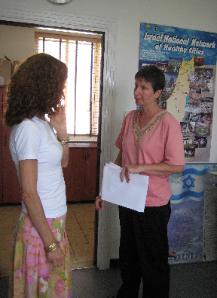
Yoline Goldberg and Yona Yahav
Karen Doryoseph
Haifa-English-Speakers
We are a group of English speakers living in the Haifa area. Most of us are in our twenties, thirties and forties,
and we are targeting people who are living here for any period of time and speaks English regardless his/her
background (German, French, American, Swedish or whatever) including study abroad Students the goal of our
group is to help people meet each other and create a community. We want to help people meet each other with
the goal of creating a community and easing the transition to living in here.We do welcome people of all
cultural and religious backgrounds.
We are a group of English speakers living in the Haifa area. Most of us are in our twenties, thirties and forties,
and we are targeting people who are living here for any period of time and speaks English regardless his/her
background (German, French, American, Swedish or whatever) including study abroad Students the goal of our
group is to help people meet each other and create a community. We want to help people meet each other with
the goal of creating a community and easing the transition to living in here.We do welcome people of all
cultural and religious backgrounds.
A new Israel government portal forum will provide professional answers to questions
posted by users regarding government services, as a new service channel to improve the
service to English-speaking citizens, residents and visitors. The e-Gov support team will
be happy to assist you to locate the information you need in the portal or in other
websites of governmental ministries and authorities.
posted by users regarding government services, as a new service channel to improve the
service to English-speaking citizens, residents and visitors. The e-Gov support team will
be happy to assist you to locate the information you need in the portal or in other
websites of governmental ministries and authorities.

Dear Olim/Returning Citizens,
I would like to start a support group for English speaking Olim and returning citizens. Group will
have weekly or biweekly meeting for open discussions about anything that may be on your mind. The klita
process, adjusting to the new life, sharing information, school systems or just to vent.
If you are interested email me your contact information and hopefully we will be able to assist each other
making the process easier (there is no charge for the group). Regards, Osnat (Jenny) Amrani
I would like to start a support group for English speaking Olim and returning citizens. Group will
have weekly or biweekly meeting for open discussions about anything that may be on your mind. The klita
process, adjusting to the new life, sharing information, school systems or just to vent.
If you are interested email me your contact information and hopefully we will be able to assist each other
making the process easier (there is no charge for the group). Regards, Osnat (Jenny) Amrani

Monsters in the City!
We are happy to announce the arrival of a very large group of new immigrant and returning citizen
monsters, a special project created and initiated by O*GE and supported by the Haifa Municipality, the
Ministry of Monster Integration, and Ethos. A very warm welcome to all friendly Haifa Monsters
We are happy to announce the arrival of a very large group of new immigrant and returning citizen
monsters, a special project created and initiated by O*GE and supported by the Haifa Municipality, the
Ministry of Monster Integration, and Ethos. A very warm welcome to all friendly Haifa Monsters
| Some special olim |
• The following two lists are general Anglo and Haifa specific lists. People advertise, buy, sell,
look for things, seek advice, etc. Getting the e-mails from them provides you with lots of info on
what is going on in Haifa relating to the Anglo community.
Hango hanglo@yahoogroups.com – send them a message asking to subscribe.
Haifalist haifalist-subscribe@yahoogroups.com – just send a message to this address
• Haifa young English Speaker list – the group has a social pub night every month and other
activities. Send e-mail to haifaenglishspeakers-owner@yahoogroups.com
look for things, seek advice, etc. Getting the e-mails from them provides you with lots of info on
what is going on in Haifa relating to the Anglo community.
Hango hanglo@yahoogroups.com – send them a message asking to subscribe.
Haifalist haifalist-subscribe@yahoogroups.com – just send a message to this address
• Haifa young English Speaker list – the group has a social pub night every month and other
activities. Send e-mail to haifaenglishspeakers-owner@yahoogroups.com
E-Mail lists

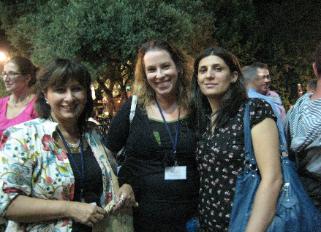
Ketty Pardo Roques, Smadar Stoller
Porat (Haifa Municipality) with
Orly Zuckermann (Jewish Agency)
Porat (Haifa Municipality) with
Orly Zuckermann (Jewish Agency)

Vice Mayor Julia Strayem: "Just today, 20 years ago I immigrated to Israel straight
to Haifa". The New Year's reception held by the Association for Immigration in
Haifa for new immigrants who came to Haifa last year, was attended by hundreds
of immigrants who are in contact with the organization which helps in their
absorption process.
Immigrants who took part in a New Year toast ceremony for the first time, noted
that due to the special mechanism in the initial reception and to the cooperation
between the Municipal Authority of Immigrant Absorption, the Jewish Agency and
the Ministry of Absorption, Haifa leads for the absorption of immigrants as the most
attractive city among the big cities. Haifa Mayor, Yona Yahav congratulated the
immigrants and said, "immigration is one of the most beautiful gifts received by
Haifa and I really want you to find your future here in our city."
With an emotion that swept all the participants Deputy Mayor Julia Strayem said
that she made Aliya exactly the same day 20 years ago and immediately chose Haifa
as her permanent place of residence. From the first moment I got here I felt
"connected" to the city and its residents. Although she recorded that it was not easy
because of the language barrier and of economic difficulties, the residents of the city
always gave me light and a warm feeling as though I was born here. "
"I love Haifa" concluded Yulia Strayem with tears of emotion in her eyes.
Translated from Ironet
to Haifa". The New Year's reception held by the Association for Immigration in
Haifa for new immigrants who came to Haifa last year, was attended by hundreds
of immigrants who are in contact with the organization which helps in their
absorption process.
Immigrants who took part in a New Year toast ceremony for the first time, noted
that due to the special mechanism in the initial reception and to the cooperation
between the Municipal Authority of Immigrant Absorption, the Jewish Agency and
the Ministry of Absorption, Haifa leads for the absorption of immigrants as the most
attractive city among the big cities. Haifa Mayor, Yona Yahav congratulated the
immigrants and said, "immigration is one of the most beautiful gifts received by
Haifa and I really want you to find your future here in our city."
With an emotion that swept all the participants Deputy Mayor Julia Strayem said
that she made Aliya exactly the same day 20 years ago and immediately chose Haifa
as her permanent place of residence. From the first moment I got here I felt
"connected" to the city and its residents. Although she recorded that it was not easy
because of the language barrier and of economic difficulties, the residents of the city
always gave me light and a warm feeling as though I was born here. "
"I love Haifa" concluded Yulia Strayem with tears of emotion in her eyes.
Translated from Ironet

Shay Fished and Julia Strayed,
Association for Integration of Immigrants in Haifa
Association for Integration of Immigrants in Haifa
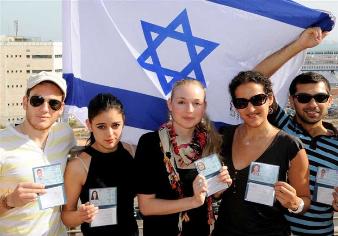
New olim will be given a free SIM with 200 minutes of air time when they arrive.">New olim will
be given a free SIM with 200 minutes of air time when they arrive.
be given a free SIM with 200 minutes of air time when they arrive.
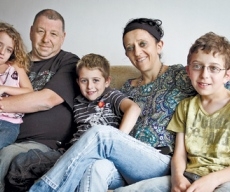

Yoline Goldberg
who for many years played a central
role in setting up a Municipal
framework for assisting olim, was a
driving force for the aliya from
Western countries and initiated the
French Community of Haifa
who for many years played a central
role in setting up a Municipal
framework for assisting olim, was a
driving force for the aliya from
Western countries and initiated the
French Community of Haifa